
Key Takeaways
- Environmental implications of unwanted Methane gas
- Economic and Financial costs of Methane emissions
- Why is it critical to reduce methane emissions?
- Recycling methane gas to power Bitcoin – How it works
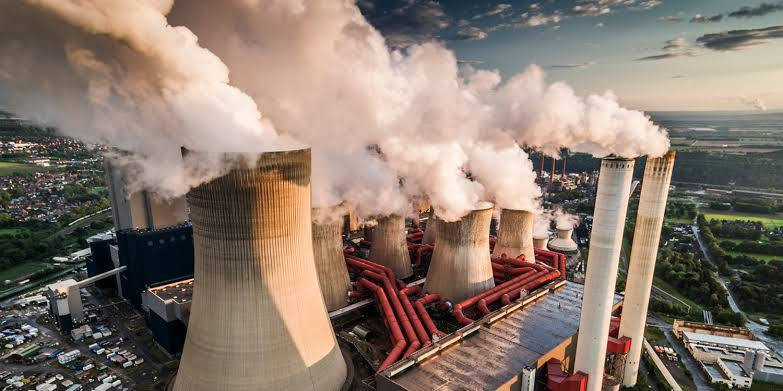
Aerial view of a power plant with cooling towers releasing steam. Source: Unsplash
Oil and gas firms have been struggling with the challenge of what to do when they hit a natural gas formation while drilling for oil for years. We see flares all the time in the oil and gas industry and know how wasteful they were. Using stray natural gas that oil corporations don’t want to use to power a quest for another treasure, such as Bitcoin, is a novel technique to not only reduce emissions but also monetize gas.
Environmental implications of unwanted Methane gas
Methane is a powerful greenhouse gas, at least 84 times more potent than carbon dioxide in the first 20 years after it is emitted. Methane emissions from the oil and gas sector can be found in every part of the industry, from production to distribution units.
While oil can be simply trucked to a remote location, gas transportation necessitates the use of a pipeline. If a drilling site is close to a pipeline, the gas is thrown in and the seller on the other end takes whatever cash the buyer is ready to pay that day. If it’s 20 miles from a pipeline, though, drillers will usually burn it or flare it. As a result, you’ll often witness flames leaping from oil fields.
Methane emissions (from combustion) are the principal cause of ground-level ozone formation, a dangerous air pollutant and greenhouse gas that causes 1 million premature deaths per year. Methane is a potent greenhouse gas that is 80 times more hazardous than carbon dioxide at warming during a 20-year period.
Since pre-industrial times, methane has accounted for around 30% of global warming, and it is spreading faster than at any other time since records began in the 1980s. Even as carbon dioxide emissions decreased during the pandemic-related lockdowns of 2020, atmospheric methane increased, according to statistics from the US National Oceanic and Atmospheric Administration.
Carbon dioxide can last hundreds to thousands of years in the atmosphere. This means that even if emissions were drastically decreased immediately, the climate would not be affected until later in the century. Methane, on the other hand, takes only approximately a decade to dissipate. As a result, limiting methane emissions today would have an immediate impact and is important for keeping the globe on a 1.5°C course.
Economic and Financial costs of Methane emissions
Beyond the environmental implications of flare Methane gas, drillers are essentially burning money as well. To many, this is a major issue that necessitates immediate attention in order to find a solution.
Researchers studied the consequences of releasing 50 gigatons of methane over a decade using an economic model very similar to the one used by Lord Stern in his 2006 evaluation of the economics of climate change. They calculated that this would result in a $60 trillion cost in climatic consequences such as flooding, sea level rise, agricultural devastation, and human health.
Technology advancements and field practices are reported to be able to reduce methane emissions by 40% at a cost of only 1 cent per thousand cubic feet (natural gas is typically marketed for roughly $4-$5 per thousand cubic feet).
Why is it critical to reduce methane emissions?
Reducing human-caused methane emissions is one of the quickest and most cost-effective ways to slow global warming and contribute to global efforts to keep temperatures below 1.5 degrees Celsius.
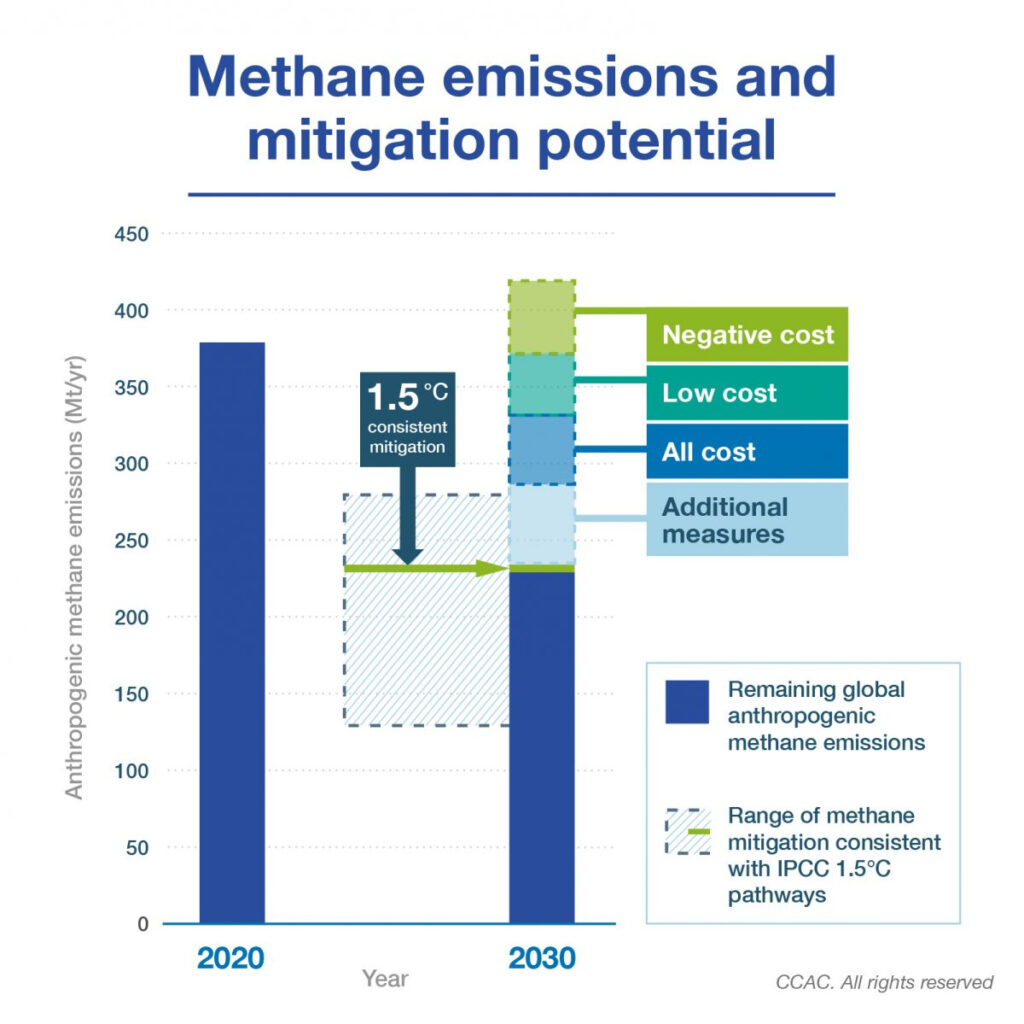
Source: Climate and Clean Air Coalition
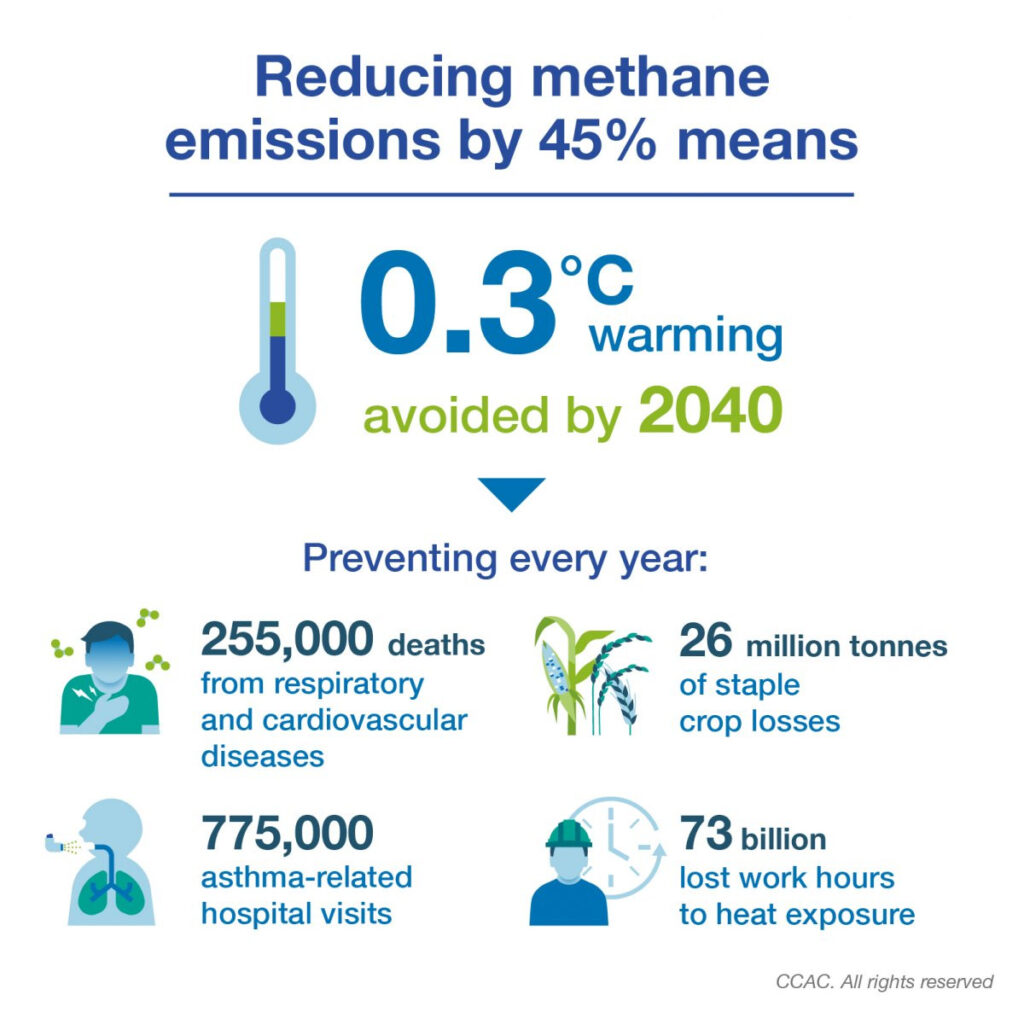
Global action to reduce methane emissions offers significant benefits for human health, food security, and ecosystems because it can lower tropospheric ozone formation, an air pollutant with various harmful implications.
Source: Climate and Clean Air Coalition
Reducing methane emissions by 45 percent would provide immediate and long-term advantages to agriculture, human health, and ecosystem health, among other things. These benefits would amount to a global saving of around US$470 billion per year according to the Climate and Clean Air Coalition (CCAC).
Recycling methane gas to power Bitcoin mining: How it works
Bitcoin leverages a Proof-of-Work (PoW) blockchain consensus mechanism that requires very high computing power to solve complex mathematical equations to verify transactions and add them to the blockchain digital ledger. Estimates of how much leakage is occurring are still being refined, but there are a number of technologies, like Bitcoin mining, that might lead to significant reductions in methane emissions.
A vast amount of wasted gas is released into the atmosphere around the planet because it has nowhere else to go. Vacuums are now being used by portable Bitcoin mining farms to suck up Methane gas, which is then instantaneously recycled to fuel Bitcoin mining rigs.
ExxonMobil, the world’s largest oil and gas company, has taken modest advances in a new path. The company is testing a project that will divert flared methane gas and utilize it to mine cryptocurrency.
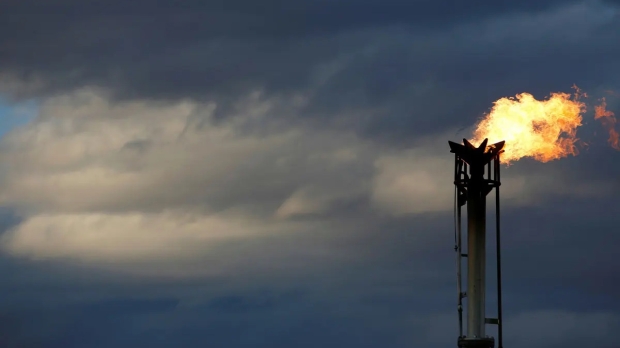
Exxon and Crusoe Energy Systems reached an agreement to use flared gas from a North Dakota oil drilling site to power mobile generators that keep Bitcoin mining servers running. Crusoe’s entire mission is to “align the future of computation with the future of the climate” by minimizing the waste methane gas that comes with conventional flaring.
The project consumes 18 million cubic feet of waste gas per month, mostly methane, that would otherwise be flared and released into the atmosphere due to limited pipeline capacity. Instead, this excess natural gas is now being used to fuel Bitcoin mining, turning a wasted byproduct into a new source of value.
The methane gas is still burned, to be clear. It’s simply used to fuel worthwhile activity: Bitcoin mining operation rather than being released into the atmosphere, ensuring that greenhouse gas emissions aren’t wasted. For example, a Giga firm sets a shipping container with thousands of bitcoin miners on top of an oil well, diverting natural gas to generators, which turn the gas into energy, which is then used to power the miners.
The technique reduces CO2-equivalent emissions by around 63 percent when compared to continuing flaring according to Denver Crusoe Energy Systems. Giga executives are part of a rising group of investors that are betting big on bitcoin mining’s ability to transform the energy industry’s economics. They also believe bitcoin has the potential to usher in a new era of financial liberty.
Oil and gas moguls are increasingly turning to use of excess methane gas to mine cryptocurrency, with intentions to grow in the near future. The efforts being made to mine Bitcoin with waste energy and renewables at a sustainable and ecologically safe pace will not only strengthen the network (hash rate will increase) but will also speed up mainstream adoption because Bitcoin needs a green narrative.
Editor’s note: This article was originally published on GreenBitcoin by the same author. It has been republished here on TodayinCrypto following the closure of GreenBitcoin.