
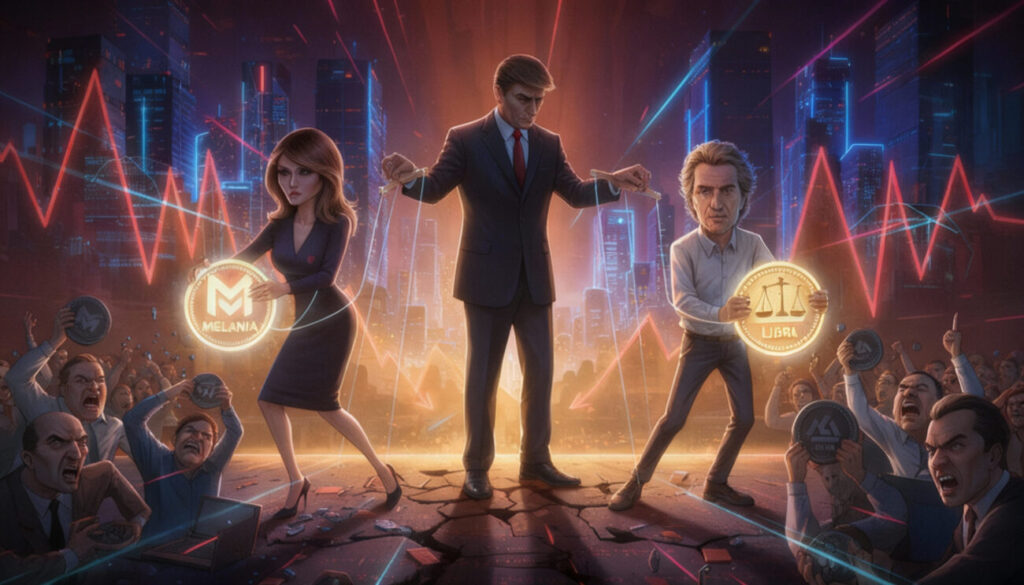
A bombshell class action lawsuit has thrust the crypto world into chaos, accusing Meteora founder Benjamin Chow of orchestrating a sophisticated fraud behind the high-profile Melania and Libra meme coins. While First Lady Melania Trump and Argentine President Javier Milei lent their names to these tokens, the lawsuit claims they were mere “window dressing” for a scheme that left investors reeling. Here’s how a calculated liquidity trap allegedly unfolded, shaking trust in the meme coin market.
The Rise and Fall of Celebrity-Backed Tokens
In January 2025, the crypto community buzzed with excitement when First Lady Melania Trump announced a Solana-based meme coin bearing her name, MELANIA. Launched just days after President Donald Trump’s own token, MELANIA skyrocketed in value, drawing in eager investors chasing the hype. Similarly, Argentine President Javier Milei promoted LIBRA, a token pitched as a lifeline for small businesses in Argentina’s struggling economy. Both coins surged spectacularly upon launch, with MELANIA hitting dizzying heights before crashing 99% in the following months, and LIBRA plummeting 90% within hours. Investors were left holding near-worthless assets, and questions began to swirl.
The allure of these tokens wasn’t just their celebrity endorsements. They promised a blend of cultural relevance and financial opportunity, tapping into the fervor of meme coin mania. MELANIA leaned on the First Lady’s brand, while LIBRA tied itself to Milei’s vision of an “Argentine revival.” But according to a class action lawsuit filed in Hurlock v. Kelsier Ventures, these public figures were not the masterminds—nor the culprits. Instead, the lawsuit points to Benjamin Chow, founder of Meteora, as the architect of a “coordinated liquidity trap” that used their names to mask a deeper fraud.
The Alleged Mastermind: Benjamin Chow
At the heart of the lawsuit is Benjamin Chow, described as the “center of the enterprise” that orchestrated the rise and fall of at least 15 tokens, including MELANIA and LIBRA. The plaintiffs allege that Chow, alongside a tight-knit group of collaborators, engineered a pump-and-dump scheme that exploited the credibility of high-profile figures. The complaint details how Chow’s Meteora, known for its automated market maker (AMM) business, operated a separate arm under the same name to launch these fraudulent tokens. This operation, the lawsuit claims, was built on a “brand, infrastructure, and code base” designed to manipulate markets and fleece investors.
Chow’s alleged collaborators included Ng Ming Yeow (known as “Ming”), a co-founder of Meteora and Jupiter, and the Davis family, operating through Kelsier Ventures. The lawsuit paints a picture of a well-oiled machine, with Hayden Davis, CEO of Kelsier Ventures, executing token launches under Chow’s direct instructions. Private Telegram screenshots obtained by Burwick Law, the firm representing the plaintiffs, reportedly show Davis admitting to working under Chow’s command. These revelations have shifted the spotlight from the public figures to the shadowy operations behind the scenes.
A Blueprint for Deception
The lawsuit outlines a chillingly consistent playbook: launch a token tied to a high-profile name or theme, hype it to drive up prices, and then quietly dump the tokens to cash out, leaving retail investors with massive losses. Of the 15 tokens allegedly launched by Chow’s operation, the complaint focuses on five, with MELANIA and LIBRA being the most prominent. On-chain analytics from Bubblemaps uncovered links between the wallets used to launch these two tokens, suggesting a coordinated effort. The rapid price crashes—MELANIA’s 99% drop and LIBRA’s 90% plunge—followed a pattern of insiders selling off their holdings at peak valuations.
The plaintiffs argue that Melania Trump and Javier Milei were not complicit in the fraud but were instead used as “props” to lend legitimacy to the tokens. Melania’s involvement was limited to promotional posts, while Milei quickly deleted his endorsements of LIBRA after its collapse. The real crime, the lawsuit asserts, was engineered by Chow and his team, who exploited the trust and excitement surrounding these figures to lure investors into a trap. The fallout has sparked outrage, with many questioning the integrity of meme coins and the ease with which bad actors can manipulate the market.
Legal Battles and Unfrozen Assets
As the scandal unfolded, Chow stepped down from Meteora in February 2025, just as details of the meme coin launches began to surface. Neither Chow nor Kelsier Ventures responded to requests for comment from Decrypt, leaving many questions unanswered. Meanwhile, the legal battle has taken unexpected turns. In August 2025, a judge ordered the release of $57.6 million in USDC tied to the Libra meme coin, expressing skepticism about the plaintiffs’ chances of success. This ruling has cast doubt on the lawsuit’s outcome, but Burwick Law remains steadfast, citing the Telegram screenshots and other evidence as proof of Chow’s central role.
The case has broader implications for the crypto industry, where meme coins have long been a double-edged sword—offering quick gains but also high risks. Investors are now grappling with the reality that even tokens tied to prominent figures can be vehicles for fraud. The Hurlock v. Kelsier Ventures lawsuit serves as a stark reminder of the need for due diligence in a market often driven by hype and speculation.
What’s Next for Meme Coins?
The Melania and Libra saga has left a stain on the meme coin market, raising questions about regulation, accountability, and the role of celebrity endorsements in crypto. While Melania Trump and Javier Milei have escaped direct blame, their involvement highlights the power of star-studded branding to sway investors. For now, the focus remains on Benjamin Chow and his alleged collaborators, whose actions may have cost investors millions. As the lawsuit progresses, the crypto world watches closely, wondering if justice will be served—or if the meme coin frenzy will continue unchecked.