
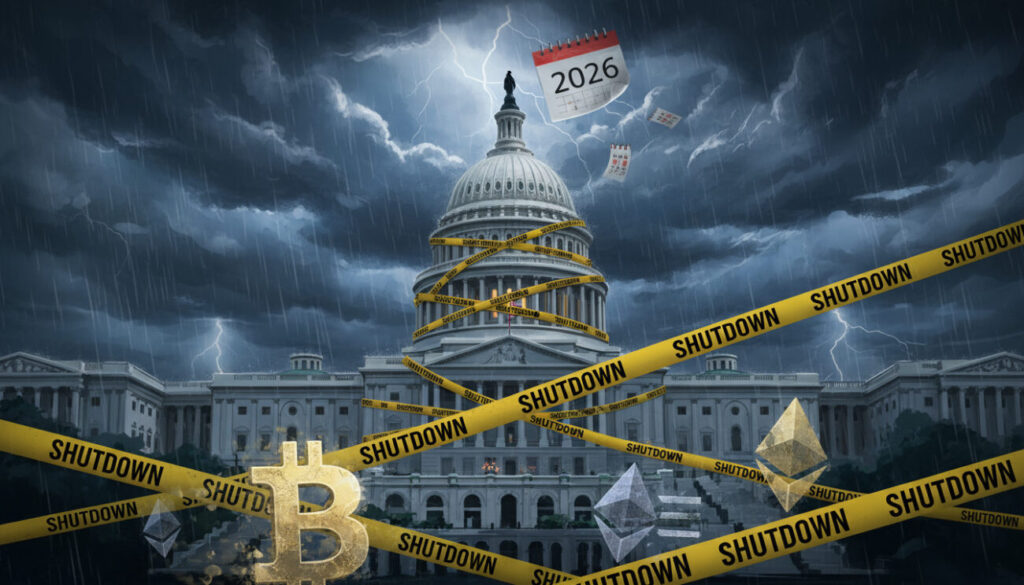
The US government’s ongoing shutdown is throwing a wrench into the crypto world’s hopes for clear regulations, with key bills now potentially stalled until 2026 as political infighting escalates ahead of midterms. This gridlock isn’t just Washington drama—it’s rippling through markets, leaving investors in a state of fear while tokens tumble.
Behind the Shutdown Stalemate
What started as a standoff over Republican demands has morphed into a five-week headache, with Democrats showing signs of weariness. Senators like Dick Durbin have voiced exhaustion, noting, “I sense that people are tired of this shutdown and all that flows from it.” Internal rifts are widening, particularly over extending Affordable Care Act subsidies, while bipartisan talks flicker but risk collapse. Lawmakers such as Jeanne Shaheen and Elissa Slotkin are pushing negotiations to reopen agencies, but House leaders demand concrete plans before budging.
When Will the Lights Come Back On?
Resolution remains elusive as Republicans debate deadlines—Senator Susan Collins eyes December 19, while conservatives demand a January push. A stopgap bill could emerge soon, but Collins warns it “could still fall apart.” Beyond politics, the shutdown’s real-world bite includes delayed flights and food aid, amplifying urgency. Yet, with midterms looming and Democrats eyeing Trump’s crypto connections, the path forward is murky at best.
Crypto’s Collateral Damage
The crypto sector is feeling the freeze hardest. A major market structure bill aiming to split oversight between the SEC and CFTC is on indefinite hold due to furloughed staff. Industry insiders call crypto policy a priority but caution that prolonged delays could shove votes into 2026. Timing, they say, is the ultimate saboteur in this high-stakes game.
Market Mood: Fear Grips the Crypto Sphere
Coinciding with the chaos, crypto markets are sliding, with most tokens in bear territory per CoinMarketCap data. The fear and greed index lingers in “fear” mode, signaling investor jitters amid uncertainty. Still, the average RSI around 50 keeps things neutral—not oversold, not overbought—hinting at a precarious balance that could tip either way.