
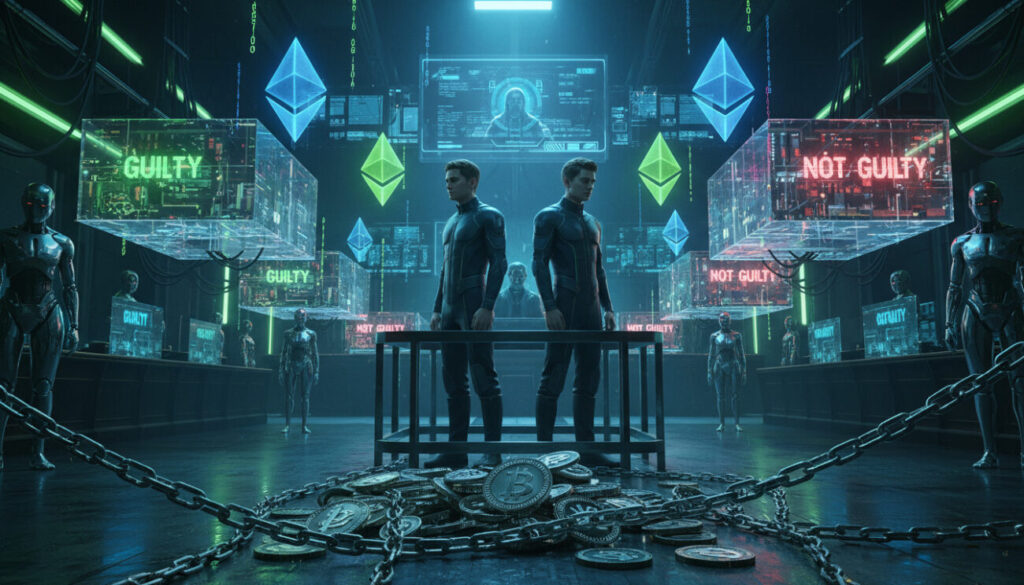
In a stunning twist for the crypto world, the high-profile trial of MIT-educated brothers Anton and James Peraire-Bueno has ended in a mistrial. Accused of masterminding a lightning-fast $25 million Ethereum exploit using MEV bots, the siblings faced charges of fraud and money laundering. After three weeks of intense deliberations in a Manhattan federal court, the jury deadlocked, forcing U.S. District Judge Jessica Clarke to declare a mistrial on November 1, 2024. This outcome has left the blockchain community buzzing about the fine line between innovation and illegality in decentralized finance.
The $25M Heist in 12 Seconds
The case revolves around a 2023 Ethereum blockchain scheme where the Peraire-Bueno brothers allegedly deployed MEV (maximal extractable value) bots to manipulate transaction orders. Prosecutors claimed the duo spent months plotting, posing as legitimate validators in a “bait and switch” tactic that tricked users and siphoned off millions in digital assets—all executed in just 12 seconds. MEV bots, which exploit transaction sequencing for profit through front-running or sandwich attacks, are common in crypto trading, but this exploit pushed boundaries into alleged criminal territory.
Clashing Narratives in Court
During the trial, prosecutors painted the brothers as cunning fraudsters, arguing their actions rigged the system and constituted wire fraud. “Bait and switch is not a trading strategy. It is fraud,” they declared in closing arguments. The defense fired back, likening the exploit to “stealing a base in baseball” and insisting no fraud occurred—thus no conspiracy or laundering. Crypto advocacy group Coin Center even filed an amicus brief supporting the defense, highlighting the case’s potential to reshape how blockchain activities are legally viewed.
What’s Next for Crypto Regulation?
The mistrial has ignited debates across the industry, with experts like Carl Volz from Gunnercooke questioning if the indictment truly fits wire fraud definitions. While the brothers’ fate remains uncertain—prosecutors could push for a retrial—the saga underscores the regulatory gray areas in DeFi. As blockchain tech evolves, this deadlock could influence future prosecutions, blurring the lines between savvy trading and outright theft in the wild west of crypto.