
President Donald Trump’s promise of a $2,000 “tariff dividend” for most Americans has stirred optimism among crypto investors who see the plan as a potential liquidity boost for digital assets. But the policy’s fate now rests with the U.S. Supreme Court, where legal challenges threaten to derail the proposed economic stimulus.
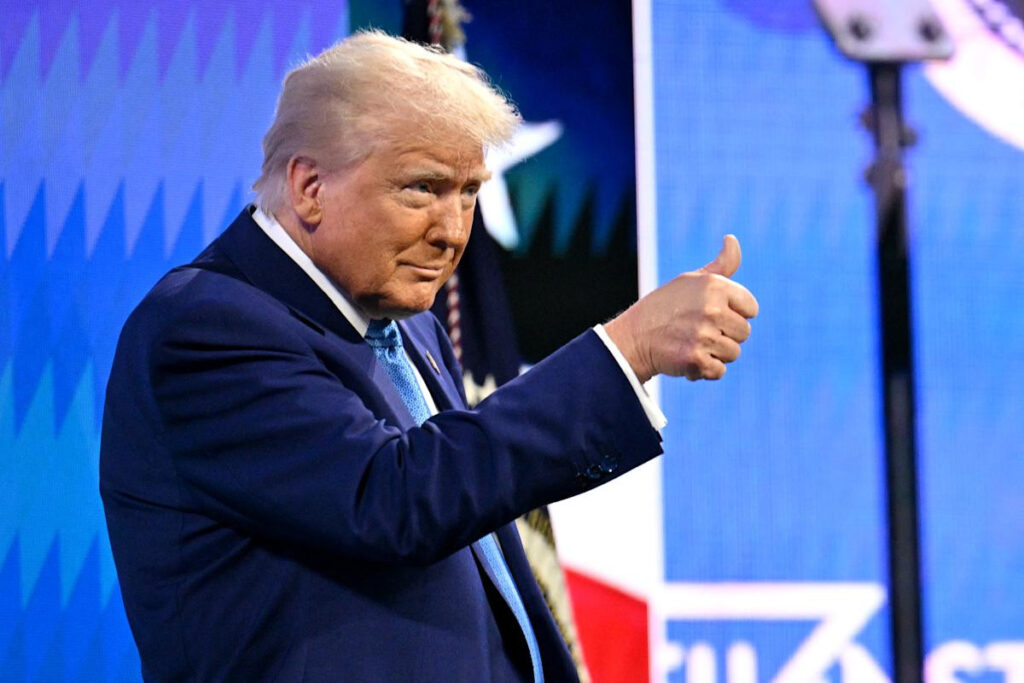
Trump’s Tariff Dividend Proposal Sparks Economic Debate
On Sunday, U.S. President Donald Trump announced plans for a nationwide “tariff dividend,” pledging payments of at least $2,000 per person to low and middle-income Americans. The initiative, according to Trump, would redirect funds collected from tariffs on foreign trade into direct payments for U.S. citizens.
“A dividend of at least $2,000 a person, not including high-income people, will be paid to everyone,” Trump posted on Truth Social, touting the move as a fair return from his aggressive trade policies. The announcement drew sharp responses from both supporters and critics, reigniting debates about the long-term costs of populist economic interventions.
Legal Uncertainty Clouds Supreme Court Hearing
While the proposal generated excitement among investors, its legality remains uncertain. The U.S. Supreme Court is currently hearing arguments over whether Trump has the constitutional authority to impose such sweeping tariffs. Early sentiment among prediction markets reflects widespread doubt that the policy will stand.
On the Kalshi trading platform, users placed the odds of court approval at just 23%, while Polymarket participants estimated them even lower at 21%. Trump, however, defended his position, arguing that presidential powers should permit tariff measures tied to national security. “The president is allowed to stop all trade with a foreign country but not place a simple tariff?” he asked rhetorically.
Crypto Markets React to Stimulus Optimism
Crypto investors quickly interpreted Trump’s announcement as a bullish signal. Analysts expect that if the “dividend” is approved, a portion of the distributed funds will find its way into digital assets, echoing trends seen during past stimulus periods.
Market commentator Anthony Pompliano noted, “Stocks and Bitcoin only know to go higher in response to stimulus,” highlighting the correlation between government spending and risk-asset appreciation. Similarly, traders anticipate that new liquidity from consumer payouts could lift Bitcoin and altcoin prices in the short term.
Economists Warn of Inflation and Debt Concerns
Despite the initial enthusiasm, economists and financial analysts warned of potential long-term consequences. Research group The Kobeissi Letter estimated that around 85% of U.S. adults would qualify for the payments, based on previous COVID-era stimulus models. However, the group cautioned that the move could expand the national debt and fuel inflation.
Bitcoin advocate Simon Dixon echoed similar concerns, stating, “If you don’t put the $2,000 in assets, it’s going to be inflated away or just service some interest on debt.” Analysts fear that any short-term gains in asset prices may come at the expense of rising consumer prices and weakened purchasing power.
Balancing Stimulus Benefits and Fiscal Risks
While the proposed “tariff dividend” could inject billions into U.S. households, its success hinges entirely on the Supreme Court’s ruling. If approved, it could stimulate crypto adoption and reinforce Bitcoin’s narrative as a hedge against inflation. If struck down, however, markets may face disappointment and renewed volatility.
For now, investors are closely watching Washington, weighing the promise of economic stimulus against the legal and fiscal risks that accompany it. The next ruling from the Supreme Court may determine not only the fate of Trump’s plan but also the near-term trajectory of the crypto market.